

I posted on my blog an article in respect of Captain ECB Blencowe in April 2023 and in June 2025 an amazing update to his story occurred and I felt it was my duty to tell his story in more depth and share the amazing news.With a simple search of ‘ECB Blencowe’ online, you will be met with a plethora of articles, some of a more fictional nature, some written by institutions with relations to home and even one created by the Regimental Museum. So why am I writing this?
Within this article I intend to produce a complete formulated history of not only Cecil Gotwaltz (Blencowe) but also the reasons why the 6th Dorsets were attacking the Bluff (The feature where Cecil would lose his life) to begin with. Some of the articles online have inaccuracies and some seem to have elements of AI interpretation. I feel a full account of his life, his military career and conclusion to his final resting place in June 2025 needs telling.
I must firstly state my sincere thanks to the family members of Cecil, who have allowed me to be part of this journey. Their support and inclusion is very much appreciated and a life long friendship has been created. It is the family which confirmed that Captain Blencowe would have used his second given name for everyday use, a trait followed by other members of the family.
Cecil’s Early life
Captain Ernest Cecil Blencowe was born on the 10th March 1881 in Derby. The son of Ernest & Sarah Gottwaltz. His father was a Soap Manufacturer in Derby and his mother was the daughter of a Brewer in Great Baddow. Maybe due to this connection his father then moved into the Brewing Business and returned to the West County in late 1881. Unfortunately, his mother died suddenly in 1882. She had been suffering from Consumption and succumbed to a burst blood vessel while at the dining table.
Cecil had a fine education, first attending the Saugeen prep school located in Derby Road Bournemouth, before joining the Green boarding house of Sherborne School in May 1896.

In 1902 Cecil like a great many others went to Canada to seek his fortune. In Cecil’s case he settled in Moose Jaw, Saskatchewan. Upon the news of his father’s ill health Cecil returned to the UK being there when his father passed away on the 19th of May 1908.
In his fathers Will, Cecil was left an estate with a value of £8,500, which is a considerable amount in today’s terms.
On the 1st of March 1910 Cecil married Ellen Mary Blanche Edwards. Two years later their daughter Eileen was born on 1st December 1912. Unfortunately this tranquillity could not last as the clouds of war gathered across Europe.

Cecil’s Military Life.
Cecil enlisted as an Officer in the British Army and was given a regular forces commission as a temporary Lieutenant into the Dorsets on the 19th of September 1914. By the 19th of December Cecil had been appointed temporary Captain and commander of ‘A’ company 6th Battalion Dorsetshire Regiment.
The 6th Battalion of the Dorsetshire regiment, the county’s own battalion, were raised in Dorchester on the 6th of September 1914. The 6th battalion was part of Lord Kitchener’s scheme to raise 500,000 soldiers, get them trained and ready for action in 1916 to aid the regular and territorial forces already deployed on the front. Yet, due to the rate at which men were being lost the call was made to send the new battalions in mid-1915.
The 6th battalion was originally designated as the Pioneer Battalion of the 50th Brigade who were within the 17th Northern Division. The battalion expressed a deep desire to be an Infantry Regiment and be in the thick of the action. Thus prior to departing for France and Flanders they were designated as a regular fighting battalion.

Capt. E.C.B. Blencowe: 2nd Row 3rd from the right. Lt Col Rowley DSO: 2nd Row Centre. Major Hughes-Onslow 2nd Row 4th from the left. Lt J Fitch 2nd Row 1st on left. Lt later Capt. BC Mozley DSO: Standing behind Capt Blencowe. Lt RWT Cox 3rd Row 3rd from the left. Lt AE Broad MC: standing behind Hughes-Onslow.
The 6th battalion made their way to France in two batches. An advance party of three officers and 96 other ranks made their way from Southampton aboard the SS City of Dunkirk for Le Havre and the rest of the men made their way to Folkestone via train and boarded the St Cecilia for Boulogne. This voyage that included Cecil consisted of 27 officers and 894 other ranks.
Overall command of the battalion fell to Lt Colonel C.A Rowley DSO. A seasoned Boer War veteran who served with the second battalion in the South African conflict.

Originally the regiment’s second in command was Major H Welman, yet he was invalided out on the 3rd of September 1915 due to sickness. Therefore, at the time of the attack on the Bluff the second in command was Major Hughes-Onslow, another seasoned soldier like Rowley.
Within the battalion there were five companies. ‘HQ’ Company under Lt Colonel Rowley DSO, ‘A’ Company under the command of Captain ECB Blencowe, ‘B’ Company originally under the command of Captain Shaw who was wounded in November of 1915. The commander of ‘B’ Company during the Bluff action is uncertain. It may have been the Regimental Bombing officer, Lt A E Broad who was invalided after the engagement which I will explain later. The other contender was 2nd Lt, later Major A E Barton who is seen on the nominal roll as the company commander as from March of 1916. The commander of ‘C’ company was Major Hughes Onslow and the commander of ‘D’ Company was Captain Johnson.

Each Company was intended to consist of 227 men apart from HQ company. There would be six officers to a company, with Company CO usually being a Major or Captain. The Company Commander would have a 2IC or second in command, which was usually a Captain, Lieutenant or Second Lieutenant. The four remaining officers within the company were usually Lieutenants or Second Lieutenants, commanding platoons consisting of 50 men.
Upon the 6th Dorsets arrival in France they embarked on a three day march to St Omer. By the 19th of July they were in Steenvoorde, on the French – Belgian border and by the 22nd they were in La Clytte which was just one and a half miles from the frontline at Kemmel.

For the rest of 1915 the Battalion were stationed in trenches at the Kemmel, La Brique, Canal Bank, St Eloi and Hooge. The Battalion did suffer casualties over this period most notably, Lt Homan who was killed. Lieutenant Walker, Captain Shaw and 2nd Lieutenant Burgess were wounded and thirty other ranks were killed between July 1915 and January 1916 with an additional 102 wounded. The battalion was relieved of duty in January of 1916 for some well earned R&R at St Omer.
However the peace and tranquillity of St Omer would soon be over as they were rapidly called back on the 7th of February. This was because on the 22nd of January 1916 the Germans had detonated a massive mine under the front edge of a man made earth feature called the Bluff.
But before we get ahead of ourselves, what was the Bluff?
The Bluff was a man-made spoil heap made from the attempted construction of the Ypres to Comines Canal.

In November 1864 construction work began to build a 10-mile section of canal to connect the Yser River to the Lys River. 63 meters of tunnel collapsed, and a large water trench was then dug, yet this suffered from landslides. In 1886 the State took over the project and resumed work in 1889. Then a 250-meter Tunnel was excavated, yet in July 1893 this also collapsed. In 1910 work resumed and at Palingbeek a bridge was built with a span of 100 meters.
In November 1912 officials came to visit the new canal and the Saint-Eloi Bridge, pleased that it would soon be open. Yet in June 1913, the bridge collapsed into the canal. Soon the clouds of war started to gather over Europe and the reconstruction was to be abandoned.
The soil from all the huge excavations was placed on the banks of the canal at Palingbeek and this created the man made feature of Spoil Bank and the Bluff. The Bluff itself was the bulbous head at the end of the spoil bank.

This section of canal would cross the front-line during World War One. It was a constructed barrier between the fighting armies and in a land of flat low-lying fields, the higher ground of the spoil bank and the bluff would be fiercely fought over. It provided observation, protection and a kill zone as man after man was sent from both sides to take advantage of this man made feature.

On the 22nd January 1916, the Germans detonated a huge mine under the British held Bluff. The Germans blew this mine to cause havoc and uncertainty within the British ranks and all units in the area were on high alert for any sign of a German attack. The British were able to turn this crater into a heavily defended position which was to aid the defence of the Bluff.
Men of the 172nd Tunnelling Company had to be diverted from St Eloi to build defensive shafts and disrupt further German tunnelling activity.
Between the 5th and 8th of February the 17th Northern division relieved the experienced 3rd division. These relatively fresh troops were being thrust into a dangerous hot zone against an experienced foe.
The 52nd Brigade took over the southern section and the canal, Bluff and New Year Trench, while the 51st Brigade covered the northern section.
Trouble began on the 14th of February 1916 when the Germans opened up with several ferocious bombardments. Due to this the 10th Lancashire Fusiliers who were stationed in defensive frontline positions on the Bluff moved to take cover in the former German mine galleries. At 5:45pm the Germans set off a series of three mines with two directly under the positions of the 10th Sherwood Foresters. All bar three of the men hiding in the mine galleries were killed by the explosions.
What followed was a terrifying attack made by the IR124 which had a strength close to 1,000 men as it was a pre 1916 battalion. They charged along a northern stretch from the canal to the ravine with the intent to capture and hold the British frontline positions and most importantly the Bluff. The Bluff is not some mountain of a feature rather the opposite. The spoil only rises about 50ft high, yet in a low lying country with few trees due to artillery, whoever held the bluff could see for miles and had a great advantage.

This charge by the IR124 hit its mark and before the men of the Sherwood Foresters and Lancashire Fusiliers could get out of their dugouts, the Germans were on top of them. Brutal hand to hand fighting ensued and this would carry on for the rest of the night. At the end of the evening the IR124 were able to consolidate their gains with attacks into the communication and second line trenches having to be repulsed by men of the 51st brigade. After the mist of battle cleared the Germans held the frontline trenches and some of our most valuable positions in the whole salient.
What ensued was similar to a group of preschoolers trying to blame each other for pushing a kid off the swing. Yet instead of children you had Lieutenant Colonels, Colonels, Brigadier Generals and Major Generals. All trying to blame one another for whose fault it was for losing these positions.
So rather than organise and methodically plan a counter attack, the plan was to send everything the 17th division had at the Bosch to recapture the positions before anyone really noticed.
At this point the Dorsets were at J camp near Renglist when Lt colonel Rowley first received the order to move with an hour’s notice. The time was 5pm on the 14th of February 1916. Military police were sent into the local town to fetch men back to camp. At 2 am on the 15th of February they marched in a bitterly cold and blinding snowstorm to get to Dickesbusch. They arrived at 4:30am. Lt Colonel Rowley was summoned to 52nd Brigade HQ where he met officers of both the 52nd and 51st Brigades and receive orders.

The news that Rowley received was damning. The 6th battalion would be leading a frontal assault from our trenches, up the spoil bank and on towards the Bluff with the specific objective to capture Crater Trench on the Bluff. Rowley was definitely told according to his own account that there were no new defensive positions along the top of the Bluff. The attack was planned to take place that evening.
To prepare for the attack one officer and one NCO were sent from each company to reconnoitre the ground. This would be where the first fatality would take place, but also the first gallantry recommendation was made. Something to note is that the Dorsetshire regiment were one of the least decorated regular line infantry units in the first world war. They are the only regular line infantry regiment not to receive a Victoria Cross during the Great war, yet this doesn’t mean they were not recommended for this award, as we will see.
Private James Mountjoy’s citation for his DCM, which hails from the 6th battalion war diary is as follows and he was originally recommended for the Victoria cross. ‘At 7 am on the 15th Feb the regimental Bombers were holding a sap near the Bluff. The Germans had aimed a machine gun at some wounded Lincolns. These were all killed or wounded. Lt Cox commanded regimental bombers and went out to bring in a wounded man, 50 yards away. He fell wounded – L/CPL Britt then went out to his maintenance but could not move him and went back for more help. In the meantime Pte Mountjoy rushed out from the trench. Got hold of Lt Cox and carried him back to the trench. This is all under heavy rifle and Machine gun fire.’ To sum this up Lt Cox who was temporarily in command of a group of bombers reconnoitring the ground could not stand the cries for help from the wounded men who were being played with and murdered by the German machine gunners. Lt Cox dashed out to rescue one of these men before being strafed and gunned down. L/Cpl Britt attempted to rescue his officer but was physically unable to retrieve him. When all hope seemed lost, Private Mountjoy leapt out of the sap and dashed towards the Lieutenant. Lt Cox was brought back but died shortly after. Private Mountjoy received the Distinguished Conduct Medal and Lance Corporal Britt received a promotion and the Military Medal.

After this short recce the attack was timed to start at 9pm on the 15th of February 1916. The order was given to the battalion to move up to Voormezeele where guides of the Lancashire Fusiliers would meet them before leading them to canal lock 8 and then to their starting point.
Upon reaching the canal lock they moved the short distance to the spoil bank. Lt Colonel Rowley beckoned Captain Blencowe, Major Hughes Onslow, Lieutenant Fitch and Lieutenant Broad and met in a damp cramped Royal Engineers dugout which was located in the slope of the spoil bank. It would be here that the full plan would be unveiled. ‘A’ Company would lead the attack led by Captain Blencowe, up the spit of the spoil bank with the objective to seize the defensive position, Crater Trench. ‘B’ Company including the regimental bombers led by the regimental bombing officer Lt A E Broad would move along the north bank of the spoil and Bluff, to bomb any enemy positions they found and support ‘A’ Company. ‘C’ Company under command of Major Hughes Onslow would attack along the side of the canal with the objective being a series of trench networks near the Bluff. The main trench being ‘New Year’s Trench.’ Finally ‘D’ Company would be held in reserve. ‘A’ Company had two machine guns, ‘C’ Company one and one with ‘D’ Company in reserve. ‘A’ Company moved up the trenches led by their guide to their launching off positions. The Germans sent over several bombardments that all missed apart from one that directly hit ‘B’ company while they were deploying on the north bank of the Bluff.
Keep in mind that it was pitch black, wet ,freezing and the area was like a lunar landscape. If they spoke too loudly the enemy would get alerted and the advance was slow through wet, snow dusted mud and shell holes littered with broken barbed wire and corrugated iron.
The Bluff was no longer a man made slope with neat trees and bushes adorning atop its feature. Instead it was a muddy hill with broken trenches. Shell holes littered the top with a plethora of iron sheets and barbed wire on the ground. It was a quagmire, it was hell in the dark.

The engagement began when ‘C’ Company who were under direct command of Major Hughes Onslow showed themselves to Germans in New Years Trench. They were greeted by a hail of rifle and machine gun fire and immediately Major Onslow was wounded. Now command of both companies fell into the hands of Captain Blencowe.
A’ company advanced up the spoil towards Crater Trench when they practically walked onto the top of a small makeshift trench. The only problem was that this trench was not empty. It was a new German position, with machine guns. It opened with a hailstorm of bullets cutting down the row of Dorsets in front of them. Lt Broad came in the nick of time and led a successful attack into the trench but was pushed out. Lt Broad was seriously wounded, to the point where he was relieved of his command. Lt Broad would die over a month later from his wounds. ‘A’, ‘B’ and ‘C’ companies were now in the thick of it, losing their commanding officers. ‘A’ Company where out in the open with stretched pockets of men across the barren top of the Bluff. The account within the battalion history is that Lt Mozley of ‘C’ Company had been notified of ‘A’ Company’s predicament and rushed up the steep slope from the canal to their aid, In the war diary it indicates that Mozley led two charges up the slope with the first one failing, and indicates that within the second attempt he was wounded.
According to some accounts captain Blencowe seeing the dreadful state of his company, saw one solution, a charge. Captain Blencowe rose from his position and led from the front. Pistol out Cecil charged the machine gun position, an act that would cost him his life. Differing accounts state that he was either hit in the chest or head by the enemy gun fire. Some state he reached the edge of the new trench and unloaded his revolver into the defending Germans before being hit.

By this time almost every officer of ‘A’ Company was either killed or wounded. Private Thomas Follett would take the initiative seeing the distressed situation that his company was in, Private Follett would shout to the men of his platoon, “All the NCOs are down, follow me boys we must beat them.” Follett promptly charged bayonet fixed towards the German position gunning towards the enemy at full pace. This dash of courage prompted the rest of ‘A’ Company and elements of ‘C’ to charge from what little cover they had directly on top of their foe. Follett would narrowly escape with his life, upon entering the trench thick hand to hand fighting began, Follett battled off several of his enemies but unfortunately the Germans put up a stern defence. Pte Thomas Follett received several serious bayonet wounds. As the battalion History states, ‘ the will to win was there, but shells and mortar fire had thinned their ranks on the way up,’ and during the charge ‘machine guns swept them from the flanks, it was a forlorn hope.’ For this action Private T Follett would be awarded the Distinguished Conduct Medal, at the time Britain’s second highest award for gallantry.
Thanks to the initiative of Pte Follett a small rag tag force of men was able to fight their way into the trench, fighting was desperate, fierce and brutal. Lance Corporal Frank Rabbits was one of these men. Lance Corporal Rabbits was one of the ‘C’ company bombers and in my opinion a man on a mission. Rabbits’ action details come from a couple of sources including the war diary. The official battalion history slightly contradicts the events although it was written some years after the action. As L/Cpl Rabbits, stood atop the parapet looking down on his foe his dispensed and expended all of his grenades, Rabbits then unleashed a hail of fire into the Germans before jumping in and engaging in hand to hand fighting. He had now expended all of his ammunition. Caught up in all of this excitement L/Cpl Rabbits had seemingly missed out on the crucial fact that Lt Mozley had ordered a withdrawal, seeing that he was all alone and surrounded by his foe L/Cpl Rabbits grabbed a dead German and used him as a human shield to cover his retreat. On his way back he saw a wounded comrade and decided to bring him back as well. It would be for this daring act that Lance Corporal Rabbits was awarded the Distinguished conduct medal.
After the Dorsets entered the new trench they were fought back, bullets and grenades exploding everywhere around them. Lt Mozley saw the situation, he was left with only one viable option, a formal withdrawal. Mozley ordered the remaining officers and men to withdraw one by one slowly back to British lines. By withdrawing in this manner Mozley saved the lives of many while keeping order within the ranks. For this and his work previously in the action Lieutenant Mozley was awarded the Distinguished Service Order.

Although withdrawal saved many of the men, there were still wounded out on the Bluff. Unable to resist their cries for help and moans of pain, Sgt Harold Bukley one of the battalion’s clerks dashed out into no-mans land under heavy rifle, machine gun and Grenade fire. He applied dressings to a wounded NCO and Private. He then Organised Stretcher bearers of ‘A’ company to come and assist him. For this Sargent Harold Buckley would be recommended for the Victoria Cross but was turned down and given the Distinguished Conduct Medal instead.
The attack had failed and forty four Dorsets lay dead with the overall casualties for the attack put at 139 officers and other ranks killed, wounded and missing. In addition to this, several men would later die of their wounds in the coming weeks and months, as was the case for Lt Broad MC. What remained of the 6th battalion returned to Dickesbusch to recuperate. They would go on to fight in the battle of the Somme where Major Hughes Onslow and other veterans of the Bluff attack would meet their end. The rest of the war would not be easy for the battalion. The battalion would suffer the deaths of 803 Officers and men during the war. This does not take into account the men of the battalion who would die in the months, years and decades after the war. The dead of the battalion would come from 37 different English counties and from Scotland, Ireland, Wales and the Channel islands. According to the Battalion history, 270 officers and nearly 5000 men would join the battalion as reinforcements during the war on top of their original strength before leaving for France being 1020. This means throughout the war somewhere in the region of 6300 men served with the battalion.
Due to this rushed attack and the fact that the attack had failed, all the senior officers at Brigade and Division level tried to choose someone blame. Brigadier General Fell the commanding officer of the 51st brigade submitted his report after the action, an action which he had helped form in an attempt to cover the issue that his brigade lost the frontline trenches in the first place. Fell states that he felt ‘the Dorsets were late into action,’ there is evidence of this due to a miscommunication to Lt Colonel Rowley. What this meant is that the attacks of the South Staffs and Lincolns were held up for nearly an hour. In addition, Fell explains that due to the surprise machine gun position and trenches on the Bluff the East Yorks advance was halted. Fell blames Lt Colonel Rowley for this as he was adamant that he had informed Rowley of these positions however Brigadier General Fell did not criticise the gallantry and performance of the officers and men who made the attack. Interestingly when you read the 51st Brigade’s orders all the units that are set to receive the orders have their names typed at the bottom of the last page. Yet, the Dorsets had their name added last to the list, in handwritten pencil. Could the orders have been sent late, or even sent at all?

February’s actions were a sorry tale, one of dangers and of self concerned Generals who care more about their reputation than they do the lives of their men. Rushed attacks, ill prepared and sleep deprived units with a lack of support did nothing to aid the doomed attack. From the attack of the IR 124 on the 14th of February to the 16th the 17th (Northern) Division would suffer 1696 casualties with 224 officers and men killed, 1146 wounded and 326 missing. However not all was in vain.
Learning from their mistakes the senior officers and commanders of the division redrew the attack. This time they included regular daily artillery barrages so not to give away the attack by a one off barrage. The new troops were trained on ground with similar topography and this time the attack would be synchronized with all men wearing steel helmets. This attack which took place in March of 1916 would succeed in recapturing the Bluff and its neighbouring positions, this attack was so successful it was even able to capture the German frontline trenches. In total this attack was extremely successful but also very costly, the 76th Brigade and 51st Brigade had a combined casualty figure of 65 officers and 1,599 other ranks.
The action of the 6th Dorsets at the Bluff is often an overlooked and forgotten engagement usually only discovered when researching the 6th battalion’s battle honours, yet it would be one of their most decorated engagements with two Victoria Cross recommendations, one Distinguished Service Order, a Military Cross, four Distinguished Conduct Medals and a slew of Military Medals. The sixth battalion were made up of regular men who had regular jobs but volunteered to brace the burden of the world’s problems, as the battalion history and the battalion’s memorial in Sherborne Abbey states, ‘Measure thy life by loss instead of gain; For whoso suffers most hath most to give. We have borne the burden and heat of the day”.
What happened to Captain Blencowe?
As I explained previously Captain Blencowe was most likely according to accounts killed just in front if not in the German trench which ran across the Bluff. For 109 years Cecil’s name lay upon the Menin Gate being the highest ranking Dorset on the memorial. The memorial is situated in Ypres and marks the exit point from the town to the bloody battlefield beyond. The Menin gate holds the names to 54,000 men who were killed in the Ypres salient and have no known grave. In the 6th Dorsets case over half of the men killed at the Bluff have this as their memorial. But how did Captain Blencowe’s body get lost?

Due to Cecil’s body not being recovered the military and Red Cross launched an investigation. They interviewed men of the battalion in April and May of 1916 while they were preparing for the Somme. Luckily the transcripts of these interviews still survive and can be viewed in Captain Blencowe’s file at the National archives. Amazingly nearly all the statements seem to contradict each other in one way of another.

Although there are contradictions, there is also a common thread that he was killed leading his men into the trench complex. Some say that he was wounded and died during the following day or that night and some say he was killed outright. Some say his body was not recovered yet according to others they sent out parties to find him.
I would like to bring to your attention the testimony given by Private Nelson

What is interesting about this is the detail it goes into and while I cannot locate a Lt MacMuller, the 2nd Royal Scots did take the position on the 5th of March. The Royal Scots upon capturing the position saw the amount of Dorset dead from the weeks before and buried them in a mass grave in front of the new German trench which had been discovered on that fateful night. Within the grave they buried 20 men of the battalion.
In the early 1920s the GRU (Graves Registration Unit) excavated the men to give them a Christian burial. GRU interned these 20 men into the cemetery at Bedford House. They were able to confirm the identities of only 6 of the 20 Dorset Soldiers.
They were:-
Private T Elmore
Private F Flintham
L/Cpl F Gillingham
Private W G H Tibbitts
Private CW Waters
Private F W M Wells
Out of these twenty men one had a collar badge, which was either a brass officers cap badge or a Marabout Sphinx, either one these would identify the body as an Officer, so this grave was marked as an Unknown Officer of the Dorsetshire Regiment.

The Dorsets are a relatively small regiment in the grand scheme of things and only had seven officers who had no known graves in the Ypres salient. Yet only one officer of the Dorsetshire Regiment had died at the bluff, whose body was not recovered. Therefore, it could only be Captain Blencowe. Luckily two researchers picked this up, Major Alex Edmund currently serving in the British Army and Michiel Vanmarcke who now works for the CWGC. They both submitted their respective reports to the CWGC and awaited their approval. The main factor is that his body was exhumed by the GRU in the early 1920’s from the mass grave on the Bluff, thus the reports stating it had been found a buried, during the war are incorrect.
My connection to Captain Blencowe.
At the time of writing this I am currently 15 and have had an interest in military history from the age of four when I would sit down with my Granny and question her tirelessly, hours on end about her experiences in Belfast during the second world war. From the age of eleven I have had an avid interest in the Dorsetshire Regiment and especially in medals awarded to the men of that regiment. I am born and bred in Dorset and many of these men from the Dorsetshire Regiment grew up seeing the same sights and walked the same paths as I do now. I find medals a deeply personal item as for some men such as in Cecil’s case they were the last items to ever be bequeathed to them and signified all they had sacrificed and done during the war. I purchased Cecil’s medals from Steve Law (Great War Medals) when I was twelve and I found the action in which Captain Blencowe was killed deeply fascinating. It was a small under the radar engagement where their Captain lead them into a trench and is unfortunately killed in doing so. Cecil’s medal set is one that I eventually formed quite a strong bond with as I walked the ground where the attack took place, visited the memorials that bore his name both in Flanders and in the UK. It got to the point where I started to collate other medals to men who played key roles in the action such as Pte Follett’s DCM and the group to Pte Thomas Ashmore DCM who was one of the stretcher bearers with ‘A’ Company and could of potentially according to some sources gone out and attempted to rescue Cecil.


In April of 2023, aged twelve I posted on this blog a post detailing Captain Blencowe’s action. The post was not as detailed or correct as the information I have now, and it was more of a visual journey through the battlefield. I was unsure if I should state in the blog that I was the custodian of his medals, yet in the end I decided to confirm that fact. I would visit the battlefields of Ypres numerous times a year and always visited the Bluff. I would constantly tell my Dad, that one day I would find Captain Blencowe’s body.
In 2024 I wrote, collated and delivered my first hour long presentation to my local branch of the Western Front Association. The subject matter was the Q Ship programme in World War One and a Q Ship VC winner who had taught at my school just after the end of the Great War. I was asked by the branch to deliver another talk and presentation in the February of 2025. I was delighted and started the preparation and research for the new talk, which of course would be about the 6th Dorsets at the Bluff.
I had just finished compiling the information and slides for the talk and discussed them with my Dad. Eventually we got to the topic of Cecil and how it was one of my life’s ambitions to have him buried under a headstone that bore his name.
Amazingly, that next day my blog received an email from Julie Murray (no relation) stating that she was Captain Ernest Cecil Blencowe Blencowe’s Great Granddaughter and that she had stumbled upon my blog and seen that I had his medals, She wanted to inform me that Cecil’s grave had been identified.
Anyone with an interest in the First and Second World Wars know how uncommon it is to have men rededicated, rediscovered and confidently identified. Dad came to school to pick me up and he knew this news would be mind blowing for me. He sat me in the car, explained that Julie had contacted me via the blog, and explained who she was and her relationship to Captain Blencowe, he then said “Callum, they have identified his grave, they have found it”. Being honest and shrugging any embarrassment, I burst into Tears. Tears of Joy. A medal set to a man that has meant so much to me over the past two years would finally be buried under a headstone that bore his name. Very kindly Julie extended an invitation to me and my family to come to the rededication service which would take place in Ypres in June 2025. It was also a huge honour to have both Julie and her husband Lee attend my 6th Dorsets talk with my branch of the Western Front Association. Julie was happy to take questions from a very appreciative audience.

The rededication Service.
This was the first rededication service I had attended in Ypres. I was blown away by the effort and organisation by the MOD, CWGC and everyone involved.
Julie, made me feel part of the family, and I was able to meet Midge who was Cecil’s Granddaughter in Law and Amanda who is Julie’s sister and Cecil’s Great Granddaughter.
I was honoured to take the family and Lee, Julie’s husband on a battlefield tour of the action. We followed in Cecil’s footsteps, from their Camp just outside Dikesbusch, the forming up point at lock gate 8 of the canal, then onto the Spoil Bank and the Bluff. We walked the battlefield as I explained the action. Finally we visited the mass grave location which is hidden deep in the trees and bush of the spoil bank. I had placed a wreath and crosses on this site earlier in the year .

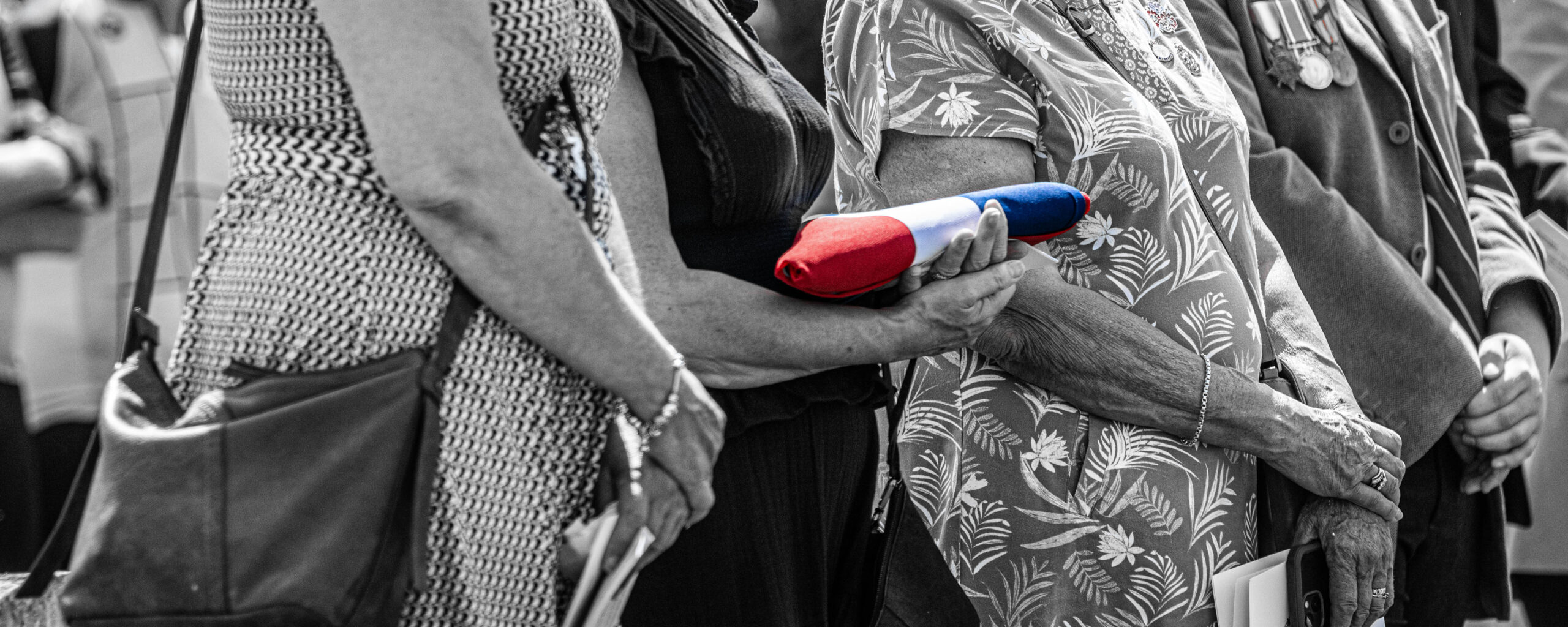
In the afternoon we attended the Ceremony at Bedford House Cemetery. The weather was perfect. The Regimental Standards were out and the direct descendants of the Dorsetshire Regiment, 1st Rifles were in attendance including their Padre who used to work at Sherborne School in the Green Boarding House. The very same house that Cecil had been a part of over 110 years ago. Unfortunately for me the emotions did get the better of me. This chapter of my life was drawing to a close, a journey that had spanned three years and a fifth of my life had been completed and done in such a splendid manner. I had gained hopefully a lifelong friendship with Cecil’s relatives and one of my courageous soldiers is finally laid to rest, amongst his fellow Dorset comrades. A plot of land for the family to visit and contemplate what might have been and to pay thanks for the sacrifice that Cecil and his fellow warriors paid for our today.


I shall end this post with the Inscription that now lays chiselled into the Portland stone headstone that adorns Captain Ernest Cecil Blencowe Blencowe’s final resting place.
Loving husband and Father, Old Shirburnian ‘A most cheerful Company commander of ‘A’’
I would just like to thank Major Edmund for allowing me to view his report. I would like to thank both Michiel and Major Alex for their work in identifying Cecil. I would also like to thank Eric Compernolle, Jan Matsaert and Danielle for the use of they fantastic photos. I would also like to thank Rachel Hassall for your encouragement and information.
I would also like to thank the hospitality of Julie, Midge, Amanda, and Lee, not only for notifying me of the rededication but also treating me as part of the family, travelling the journey with them and paying our respects to a wonderful man. I will always be ever grateful.
Thank you so much Callum for all your dedication and research, you and your dad took my family on a great tour of the battlefields and cemeteries around Ypres.
I am amazed at how much research you’ve done, and all the information you’ve given us. It was a pleasure to meet you . You’ve excelled yourself again with this report.
Thank you again
Midge Holmes